
If you’re thinking about an HC upgrade, you’re probably not short on motivation—you’re short on time.
HC isn’t just “a bigger licence”; it’s a spotlight that shows exactly how tidy (or messy) your habits are when the vehicle has more going on behind you.
And that can be a bit confronting, even for drivers who’ve been around trucks for years.
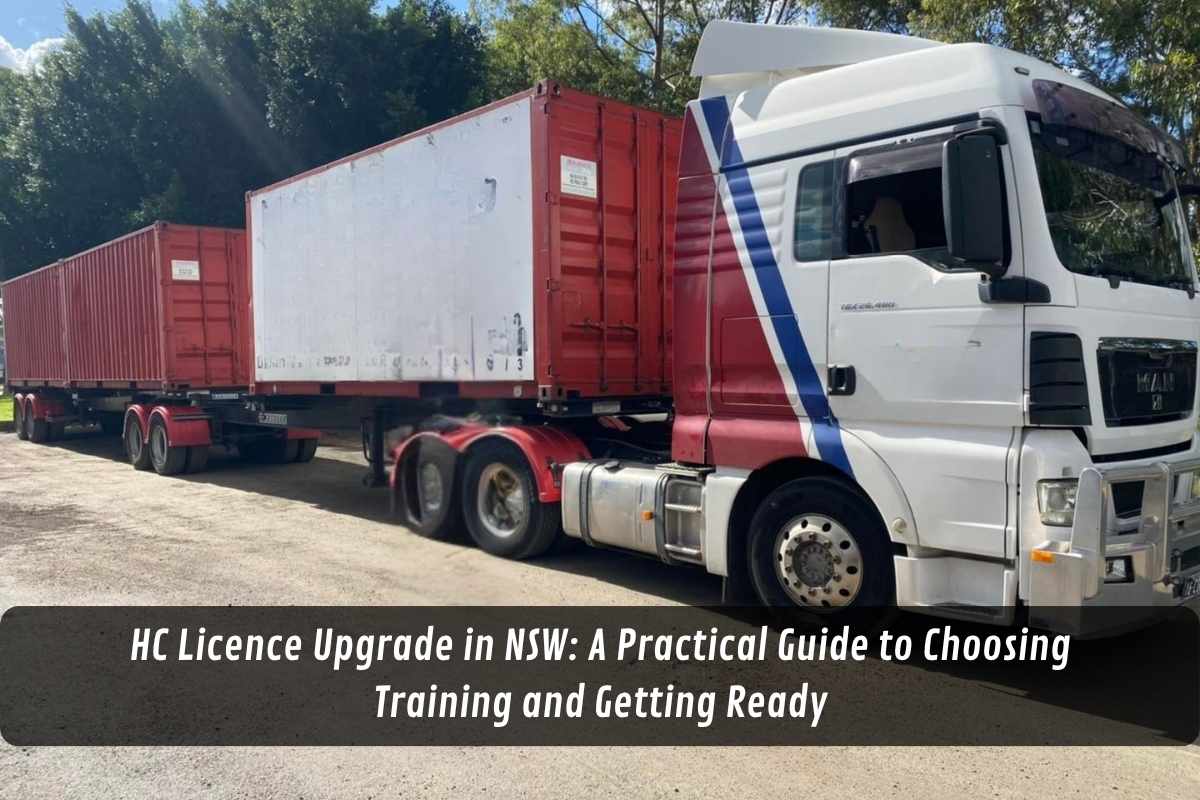
Whether you’re comparing providers or just trying to understand what a heavy combination truck licence course for Sydney drivers actually involves day-to-day, this is a straight-up plan for NSW: what to line up, what people mess up, how to pick training without paying twice, and what to do in the next two weeks so you feel steady—not lucky.
Why HC matters in the real world
HC matters because combinations punish late decisions.
In a car, you can get away with “I’ll just fix it in a second” driving—late braking, lazy mirror use, drifting a bit wide before you correct.
With a combination, those little “I’ll sort it out” moments become big, visible movements.
It’s also worth saying out loud: the licence doesn’t make you employable by itself.
Plenty of employers and contractors are quietly looking for the person who drives like a professional when no one’s watching—clean checks, calm space management, predictable choices—because that’s what keeps vehicles, schedules, and reputations intact.
Readiness checks people skip (and then regret)
Before you book anything, get brutally honest about what you’re actually ready for.
A lot of people assume they’re eligible because “I’ve been driving ages,” then find out a prerequisite or timing rule doesn’t line up with their plan, and the whole thing slides by weeks.
Then there’s the boring stuff that’s not boring when you’re being assessed: seat and mirrors, controls, and the ability to do a proper pre-drive check without it turning into a panicked rummage through memory.
One of the easiest wins is making your setup routine automatic—same order, every time.
If reversing a combination feels rusty, don’t wait until the day you’re tired, under pressure, and trying to impress someone.
Do a few short, low-stress reps beforehand, so your brain isn’t spending the whole session just remembering how the vehicle “talks” to you.
And if you’re balancing shift work, family, or a business roster, be realistic: training works best when you can keep some continuity rather than vanishing for three weeks between sessions.
Common mistakes that slow people down
Mistake 1: Practising what feels impressive, not what gets assessed.
People will spend ages on one manoeuvre because it feels like “real training,” but ignore observation timing and speed choice, which are everywhere.
Mistake 2: Driving on hope.
Hope is “I think that gap will work,” “I reckon the turn will be fine,” “It’ll probably stop in time.”
A better habit is building a buffer early so you don’t have to save it late.
Mistake 3: Mirrors as a panic button.
If your mirrors only get checked when something feels wrong, the pattern looks random and reactive.
Assessors and trainers are looking for a rhythm: information, decision, action, confirm.
Mistake 4: Rushing checks because you feel watched.
Being observed makes people speed up the exact behaviours that should slow down—pre-drive checks, hazard scans, intersections, and low-speed turns.
Mistake 5: Trying to “out-muscle” the vehicle.
Over-correcting steering and snatching the brake often comes from late processing, not weak technique.
The fix is earlier scanning, not sharper hands.
Mistake 6: Picking training based on price, not fit.
A cheaper option that doesn’t target your gaps can turn into extra bookings, missed work, and that sinking feeling of paying twice.
Choosing training: The decision factors that actually matter
If you’re paying for training, you’re paying for feedback that changes your driving, not just time in a seat.
Here’s what’s worth comparing, even if it feels a bit “over the top” at first.
1) Vehicle access and realism
Training should match the kind of combination you’re likely to work with afterwards, or at least behave similarly in braking, turning, and low-speed control.
You don’t want your first experience of a particular feel—weight transfer, swing, response under braking—to be on a stressful day.
2) Diagnosis first, practice second
A good session isn’t “let’s drive around until something happens.”
It starts with someone watching how you normally do things, then naming the two or three changes that will make the biggest difference—often things like earlier mirror checks, calmer braking, or better setup before a turn.
3) Coaching style under pressure
You’re looking for a trainer who corrects early, explains the “why,” and builds a routine you can repeat when you’re tired.
A surprising number of people can drive well when everything is calm; the upgrade is driving well when you’re a bit rattled and still sticking to the process.
4) Scheduling and continuity
Too far apart, and you spend time re-learning.
Too close together and you can overload, especially if you’re working long days.
The “sweet spot” is usually enough frequency that the habits don’t fade, but enough breathing room that you can practise deliberately without burning out.
5) A clear definition of “ready”
Ask what “ready” looks like in plain behaviours, not vague confidence.
You want it in practical terms: observation rhythm, speed selection, lane positioning, turning approach, hazard response, low-speed control, and checks.
If it helps to compare course structure and prerequisites in one place, the Core Truck Driving School HC course overview is a straightforward reference.
Operator Experience Moment
I’ve noticed a very human pattern with upgrades: confidence often dips right before it rises.
As soon as feedback gets specific—mirror timing, braking smoothness, entry speed into turns—people realise they’ve been getting by on familiarity rather than consistency.
It’s uncomfortable for a day or two, and then it becomes a relief, because practice stops being random and starts being aimed at the real problem.
That dip isn’t failure; it’s the moment you finally have something concrete to improve.
A simple 7–14 day preparation plan (that doesn’t require heroics)
This plan assumes you’re not trying to become perfect in two weeks—you’re trying to become consistent.
Days 1–2: Make your setup and checks boring (in a good way)
Pick a setup order: seat, mirrors, belt, controls, breath.
Then do a pre-drive check the same way every time—slow enough that you can’t “accidentally” skip things.
Write your order down once if you need to.
Days 3–5: Observation and speed discipline
Choose two familiar routes and focus on earlier information.
Your job is to notice hazards sooner, pick gaps earlier, and brake smoother—so you’re not constantly “catching up” to the situation.
If you feel rushed, that’s your cue to widen your scan and slow the mental pace, not to squeeze the vehicle harder.
Days 6–7: Low-speed control and positioning
Low speed exposes everything.
Do a few short, focused reps of turns and positioning with one goal: fewer corrections, cleaner setup, calmer movement.
Don’t chase speed.
Days 8–10: Combine skills under light pressure
Add simple constraints: narrate hazards quietly, keep your mirror rhythm consistent, and commit to smooth inputs even when something surprises you.
This is where the habits start to stick.
Days 11–14: Simulate “assessment habits”
Run a full routine from the start: setup, checks, observation rhythm, controlled speed choice, and calm recovery from small errors.
A small mistake is normal; the skill is not spiralling.
Local SMB mini-walkthrough: Sydney/NSW example
A Sydney-based trades supplier lands bigger jobs and realises their delivery schedule now depends on heavier combinations.
They pick one steady driver to upgrade first rather than spreading risk across three people at once.
They map training around quieter weekdays so reschedules don’t crush the roster.
They tighten yard habits—loading order, load restraint checks, and departure routines—so the driver isn’t juggling chaos on top of training.
They set a two-week window where the driver can practise without being smashed by peak deliveries.
After the first upgrade, they reuse the same prep steps for the next driver so the process becomes repeatable, not mysterious.
Practical Opinions
Build smoothness first; tight manoeuvres get easier when the basics stop wobbling.
Pay for targeted feedback, not the cheapest hour in the seat.
Treat readiness like a routine you can repeat on a bad day.
Key Takeaways
HC success is mostly about repeatable fundamentals: earlier scanning, smooth braking, and consistent checks.
The biggest slowdowns come from practising the wrong things and rushing when you feel watched.
Choose training based on diagnosis quality, coaching style, vehicle realism, and scheduling continuity.
A 7–14 day plan beats last-minute cramming, especially around NSW traffic and work rosters.
Common questions we hear from businesses in Australia
How long does it usually take to feel ready for an HC upgrade in NSW?
Usually, it comes down to how consistent the basics are before training starts, not how “keen” someone is on day one. A practical next step is to audit three things this week—mirror rhythm, braking smoothness, and pre-drive checks—then lock in a 7–14 day prep block around your roster. In NSW (especially Sydney), booking timing and traffic conditions can influence how quickly someone settles, so plan for continuity rather than one-off sessions.
What should an SME look for when choosing a training provider?
In most cases, the right provider is the one who can explain how they diagnose gaps, what they’ll prioritise first, and what “ready” looks like in behaviours you can observe. The next step is to ask for a simple description of what will be coached (observation timing, speed management, low-speed control, checks) and how progress is measured. In Australia, downtime is often the real cost for SMEs, so scheduling fit and session continuity matter as much as price.
Is it better to upgrade one driver first or train multiple staff at once?
It depends on how fragile your roster is and how quickly you need backup coverage. A practical next step is to upgrade one reliable driver first, document the preparation routine, and then repeat it for others once you know the true time-and-downtime cost. Around Sydney and greater NSW, coordinating training around delivery peaks can save you from costly last-minute reshuffles.
What’s the most common reason people need extra sessions?
Usually, it’s not a single manoeuvre—it’s inconsistent observation and late decision-making that shows up everywhere (speed choice, positioning, corrections, and braking). The next step is to practise earlier scanning on normal routes and commit to smoother inputs before the next session, rather than repeating the same task faster. In NSW traffic, disciplined space management and calm braking are the habits that stand out quickly.
If you want, I can also produce two alternate “more conversational” openings (same body structure and single-link rule) so you can pick the one that sounds closest to the publication’s voice.




Write a comment ...