
Getting an HC licence is often treated like a simple box-tick: book training, pass the assessment, move on.
In practice, the quickest path is usually the one that lines up the right training format with the way you actually learn, your schedule, and the kind of driving work you want to do.
Sydney adds a layer of reality: traffic, longer travel times between depots, and training slots that can fill up fast when demand spikes.
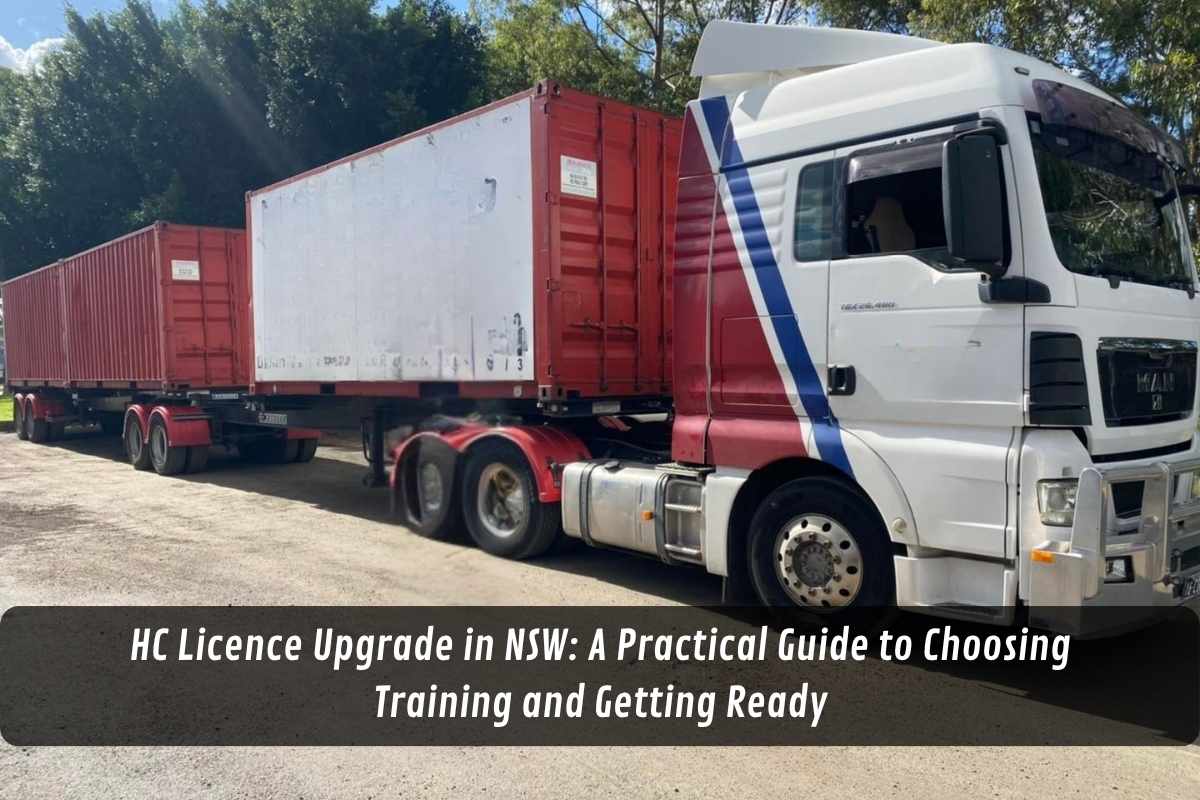
This guide breaks down how to choose a Heavy Combination training option in Greater Sydney (including North Sydney) without overbuying, underpreparing, or setting yourself up for a re-test—especially if you’re weighing HC truck licence practical training in Western Sydney as a more convenient starting point.
Know what “HC-ready” really means
A licence outcome and real-world capability aren’t the same thing.
HC vehicles change how you plan every move: braking distance, turning paths, mirror use, lane positioning, and how you read traffic two or three moves ahead—exactly the areas where truck licence course support helps most.
Before comparing providers, get clear on your goal:
Compliance-ready: You want to pass the assessment with no surprises.
Job-ready: You want confidence coupling/uncoupling, managing space in dense traffic, and handling pressure.
Role-specific-ready: You’re aiming for particular work (metro deliveries, linehaul, construction logistics) and want practice that resembles it.
If you only optimise for the shortest course, you can end up paying more later in re-tests, extra lessons, or time off work.
Prerequisites and planning that people underestimate
Most delays aren’t caused by driving skill — they’re caused by admin, timing, and underestimating how much “prep time” exists outside the cab.
Expect to think about four buckets: eligibility, scheduling, readiness, and logistics.
Eligibility and timing
Even when someone is technically eligible, the timing can still be wrong if they haven’t driven enough recently or they’re transitioning from a different vehicle type.
Schedule fit (the hidden cost)
Sydney’s travel time can turn a short lesson into a half-day commitment.
If a provider is “cheaper per hour” but takes you 70–90 minutes each way to reach, the real cost is lost work hours and mental fatigue before you even start.
Readiness: What “I’ll just learn on the day” misses
A common issue is learners arriving without basic familiarity with:
Pre-drive checks and what the assessor expects to see
Low-speed control and mirror habits
Terminology (coupling, brake tests, load security basics)
What errors are considered “critical” vs “coachable”
Those gaps are fixable — but they take time you assumed would be used for polishing driving.
Decision factors that actually matter in Sydney
If you’re trying to find a nearby heavy combination training option in North Sydney or Greater Sydney, don’t start with price. Start with fit.
1) Vehicle and training environment
Ask what you’ll be training in and where you’ll be driving.
Do you get exposure to tight turns, roundabouts, merging lanes, and stop-start traffic that mirrors metro conditions?
Is there a safe space for low-speed work (reversing practice, coupling steps, controlled manoeuvres) before you hit busy roads?
Training that’s only on quiet roads can feel comfortable — until assessment day puts you in a situation you’ve never rehearsed.
2) Course structure and “what’s included”
Two courses can have the same advertised hours and deliver totally different outcomes.
Look for clarity on:
Whether the program includes a skills baseline check at the start
How feedback is given (in-cab coaching vs end-of-session recap)
Whether there’s time allocated for coupling/uncoupling and safety checks
What happens if you need an extra session (availability, cost, lead time)
If the goal is to compare what’s included and what you’ll need to prepare, the Core Truck Driving School HC licence overview is a practical reference point before locking in dates.
3) Instructor style and learning match
Some learners need calm repetition; others need clear, direct correction.
A good fit looks like:
The instructor explains why a habit matters (not just “do it like this”)
You get prompts that build independence, not dependence
You leave each session with 2–3 specific things to practice mentally before next time
If you’ve had anxiety in tests before, it’s worth prioritising an instructor who can simulate assessment pressure without making the cab feel hostile.
4) Slot availability and location reality
In Sydney, “nearby” can change depending on the time of day.
A depot that’s 20 minutes away on a Sunday can be 60 minutes away midweek.
Decision tip: choose a provider based on repeatability — can you reliably show up on time, alert, and not rushed for multiple sessions?
5) Assessment approach: Confidence vs surprise
Ask how the provider prepares you for the assessment standard:
Do they run a mock assessment and score it honestly?
Do they tell you what a “critical error” looks like?
Do they coach the habits that reduce risk under stress (mirrors, head checks, speed discipline, positioning)?
If you only “feel good” after sessions but never get measured feedback, you don’t know where you stand.
Common mistakes that blow out time, cost, or confidence
Most people don’t fail because they can’t drive at all — they fail because of predictable, fixable patterns.
Rushing the fundamentals
Learners often want to “do the hard stuff” (bigger roads, faster speeds) before locking in basics like mirror rhythm, braking smoothness, and lane positioning.
Treating coupling/uncoupling as a formality
It’s not just a sequence — it’s a safety process. Miss a step, and you create risk.
Over-focusing on the vehicle and under-focusing on traffic reading
HC driving is decision-making: space, timing, and planning. Sydney traffic will test this quickly.
Trying to brute-force confidence
Doing more hours doesn’t automatically build confidence if the feedback isn’t specific.
Booking assessment too early because “I’ve already paid”
This is a big one. People lock in dates before they’ve had a realistic baseline check.
Operator Experience Moment
In heavy vehicle training, the biggest shift I’ve seen is when a learner stops driving “what’s in front of them” and starts driving “what’s about to happen.”
In Sydney traffic, that mental shift shows up fast: you begin to leave space earlier, brake earlier, and commit to lanes earlier—especially when you’ve chosen close to home HC training for drivers in the Northern Beaches, and you’re not arriving already stressed from the commute.
Once that clicks, the cab feels less like a test and more like a system you’re calmly managing.
Practical opinions (exactly three lines)
Prioritise a program that matches Sydney conditions over one that only feels easy.
Pay for clear feedback before paying for extra hours.
Choose the location you can reach consistently without arriving rushed.
A simple 7–14 day plan to get moving
You don’t need to solve everything today — you need a clean first sequence that reduces friction.
Days 1–2: Clarify goal and constraints
Write down:
the type of work you want in the next 6–12 months
the days/times you can train consistently
your travel-time limit (realistic Sydney travel, not best-case)
Days 3–5: Shortlist and compare providers
Compare 2–3 options on:
Vehicle type and training routes
Structure: Baseline check, mock assessment, feedback style
Availability: How quickly can you get the first and second sessions
What’s included vs add-ons
Days 6–8: Book your first session and prep properly
Before session one:
Sleep well and avoid cramming the night before
Arrive early to reduce nerves
Ask what “success” looks like for session one (e.g., mirror rhythm, smooth braking, positioning)
Days 9–14: Turn feedback into a repeatable routine
After each session, write:
2 things you did well
2 habits to fix
1 “pressure scenario” to rehearse mentally (merges, roundabouts, tight turns)
Mental rehearsal matters because it builds decision speed without needing a vehicle.
Local SMB mini-walkthrough: Sydney (how a small operator would do it)
A metro delivery business in Sydney notices they’re turning away work that requires HC capability.
They list the actual routes: industrial estates, arterial roads, and tight customer sites.
They pick training times that won’t clash with peak dispatch periods.
They choose a provider within a reliable travel time of North Sydney/Greater Sydney depots.
They ensure the program includes coupling/uncoupling practice and a mock assessment.
They stagger training so the driver builds consistency across multiple sessions.
They only book an assessment once the mock score is stable under pressure.
What to ask before you book
Use these questions to cut through vague marketing:
What will I be training in, and where will we drive?
How do you structure the first two sessions for someone new to HC?
Do you run a mock assessment with honest scoring?
How do you handle learners who need one extra session — what’s the typical wait time?
What are the most common reasons learners need a re-test, and how do you prevent them?
A provider that answers clearly is usually a provider that trains clearly.
Key Takeaways
Pick HC training that reflects Sydney driving conditions, not just quiet practice roads.
Compare programs by structure and feedback, not just advertised hours.
Travel time and scheduling reliability are part of the cost — plan for them.
Avoid predictable delays by treating safety processes and mock assessments seriously.
Common questions we hear from businesses in Sydney, Australia
How many lessons do people usually need for an HC licence?
In most cases, it depends on recent driving experience, confidence in traffic, and how quickly good habits become consistent. A practical next step is to book a first session that includes a baseline check, then decide on hours from actual feedback. In Sydney, travel time can limit how often you can train, so consistency matters as much as total hours.
Is it better to choose the closest provider or the best-reviewed one?
It depends on whether “closest” is actually reachable at the times you need to train without arriving stressed or late. A practical next step is to test the commute at the same time of day you’d attend training and see if it’s repeatable. In Greater Sydney, peak-hour congestion can turn distance into a major factor in performance.
What should a program include beyond just driving around?
Usually, the best programs include structured feedback, coupling/uncoupling steps, safety checks, and at least one mock assessment so you’re not guessing your readiness. A practical next step is to ask the provider to describe how sessions one and two are run, and what they measure. In Sydney, practising space management in real traffic conditions is often where confidence is built.
When should someone book the assessment?
In most cases, you book once your mock results are stable and you can repeat the standard under light pressure, not just on a “good day.” A practical next step is to complete a mock assessment and only set a date once the gaps are specific and manageable. In Sydney, last-minute rescheduling can be painful, so it’s smarter to book with a buffer rather than rush.




Write a comment ...